Nissan UK
Nine years. A national recruitment platform that had stopped working, for candidates and for the business. A rebuild that fixed both problems at once.
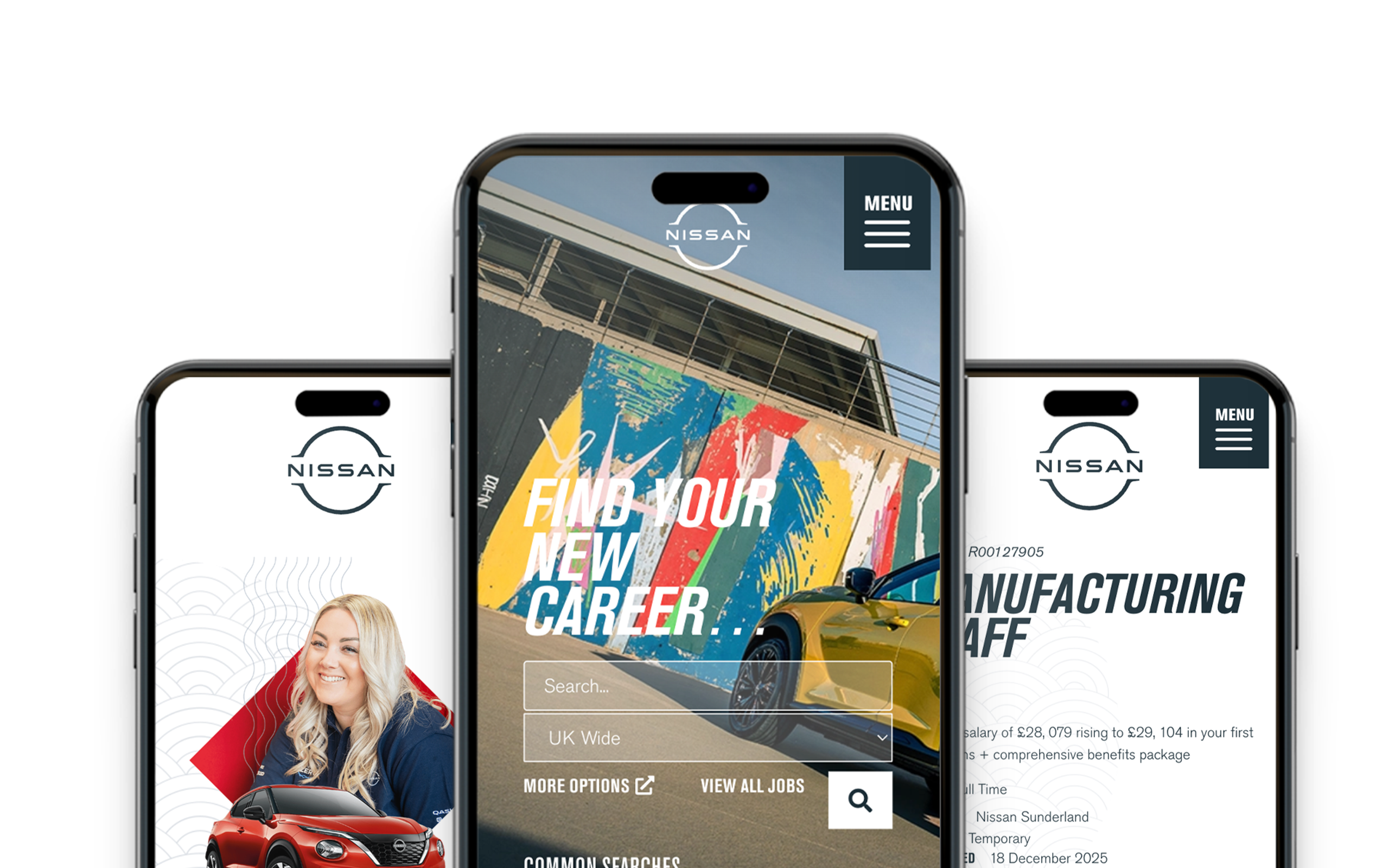
Nine years. A national recruitment platform that had stopped working, for candidates and for the business. A rebuild that fixed both problems at once.
What was broken
Three problems, one rebuild
The listings didn't scan. Recruitment sites live and die on their listings. Candidates arrive doing one thing: scanning for role, location and type. The existing listings made that hard, with no visual hierarchy, no separation to guide the eye. Individual job pages had the same problem.
The platform had become a business problem. Every campaign update needed a developer. Slow turnaround, unnecessary cost, and a client who couldn't respond to recruitment peaks without booking in resource first. For a brand running active seasonal campaigns, that was a genuine operational constraint.
The visual design had fallen behind the brand. Nissan's brand positioning had moved. The recruitment site hadn't. It looked like it belonged to an older version of the company — generic in places, dated in others, and not doing the employer brand any favours at the exact moment a candidate was deciding whether to apply.


Wireframe
What I did
Design and build ownership, end-to-end
On the original build I came in at wireframes, translating research findings into structure, layout and design, then handing off to a developer to build. On the rebuild, I owned the project end-to-end. The problems were clear enough from years of campaign delivery on the platform; what was needed was clear diagnosis and deliberate design decisions.
The listings were restructured around how candidates actually scan — clear visual separation, role title, location and type surfaced immediately, with enough whitespace to let the eye move quickly. Job pages followed the same principle, the most decision-relevant information first, with a clear path to apply.
Switching to Elementor wasn't a platform preference — it was a direct response to a documented business constraint. The rebuild gave Nissan's marketing team the ability to update campaign content, swap imagery and push new roles without waiting on a developer. That flexibility became one of the most consistently valued things about the relationship.
The visual redesign brought the site into line with where Nissan's employer brand actually was, updated design language, typography and visual tone that felt like Nissan at the moment candidates arrived, not a version from several years prior.
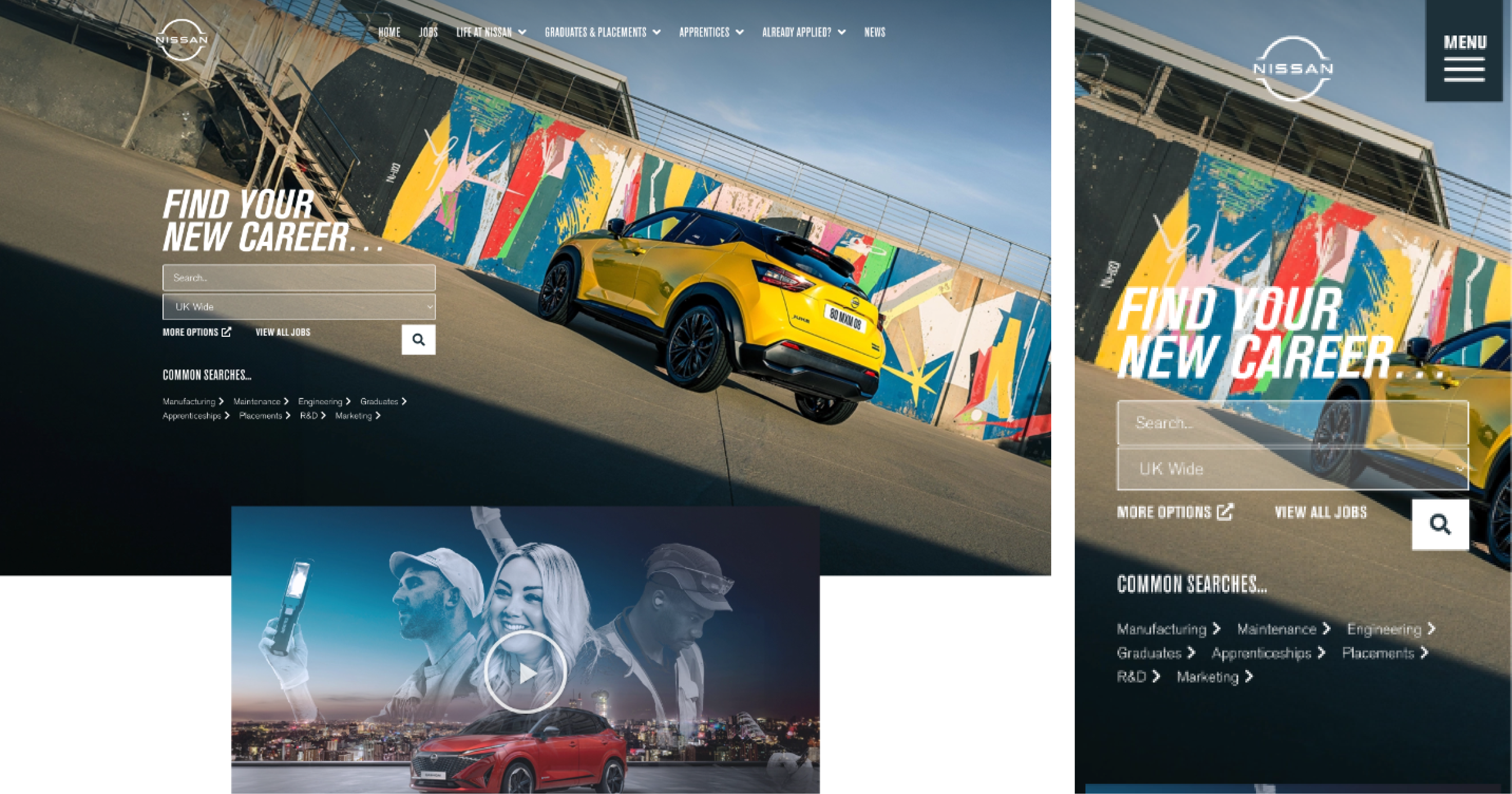
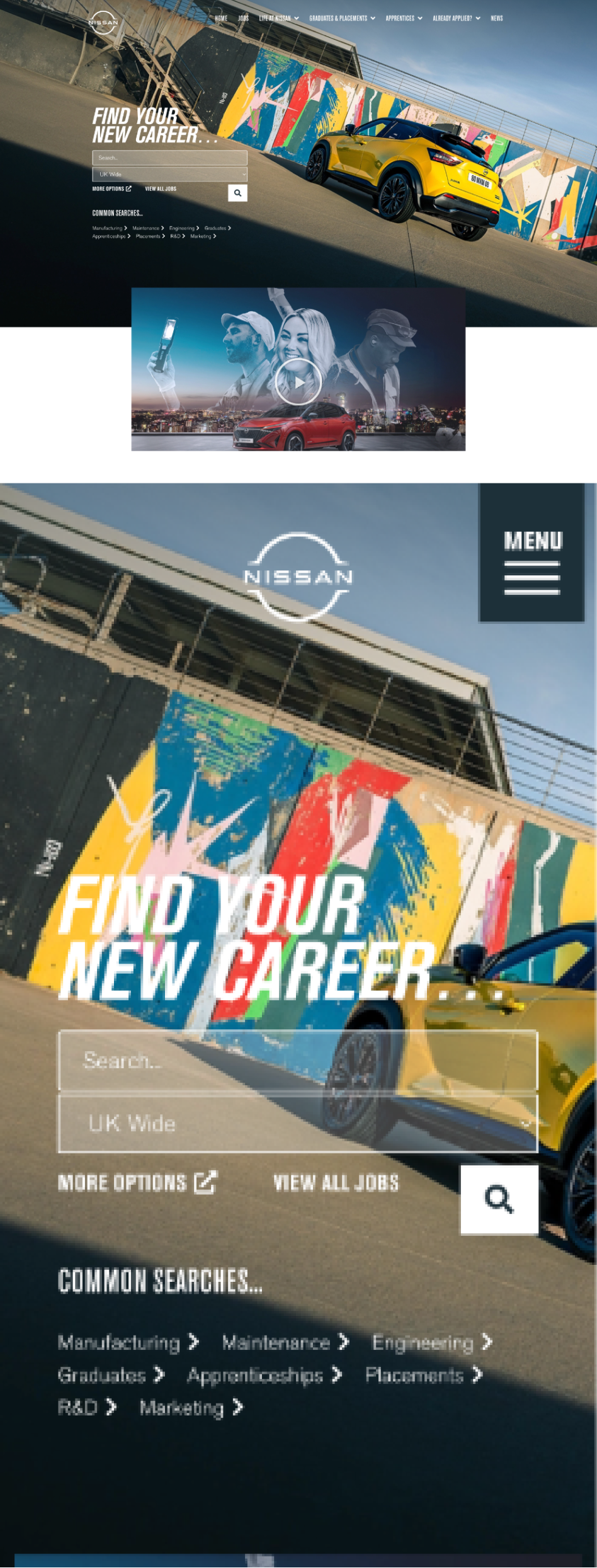
High fidelity designs for homepage
Outcome
Measurable results
increase in total web visits
increase in page views
improvement in click conversion rate YoY
The numbers reflect what happens when both the design and the platform are working. The site could move with campaigns, content could be kept current, and the listings gave candidates a clear path to the right role.
The relationship with Nissan ran for nine years, spanning recruitment campaigns, internal marketing, and a European employee brand initiative across offices in France and the Netherlands. A relationship of that length isn't a deliverable. It's the result of consistently solving the right problems.