Advanced Electronics
A technically complex product range. A platform that made every structural change expensive. A navigation that left fire installers unable to find what they came for.
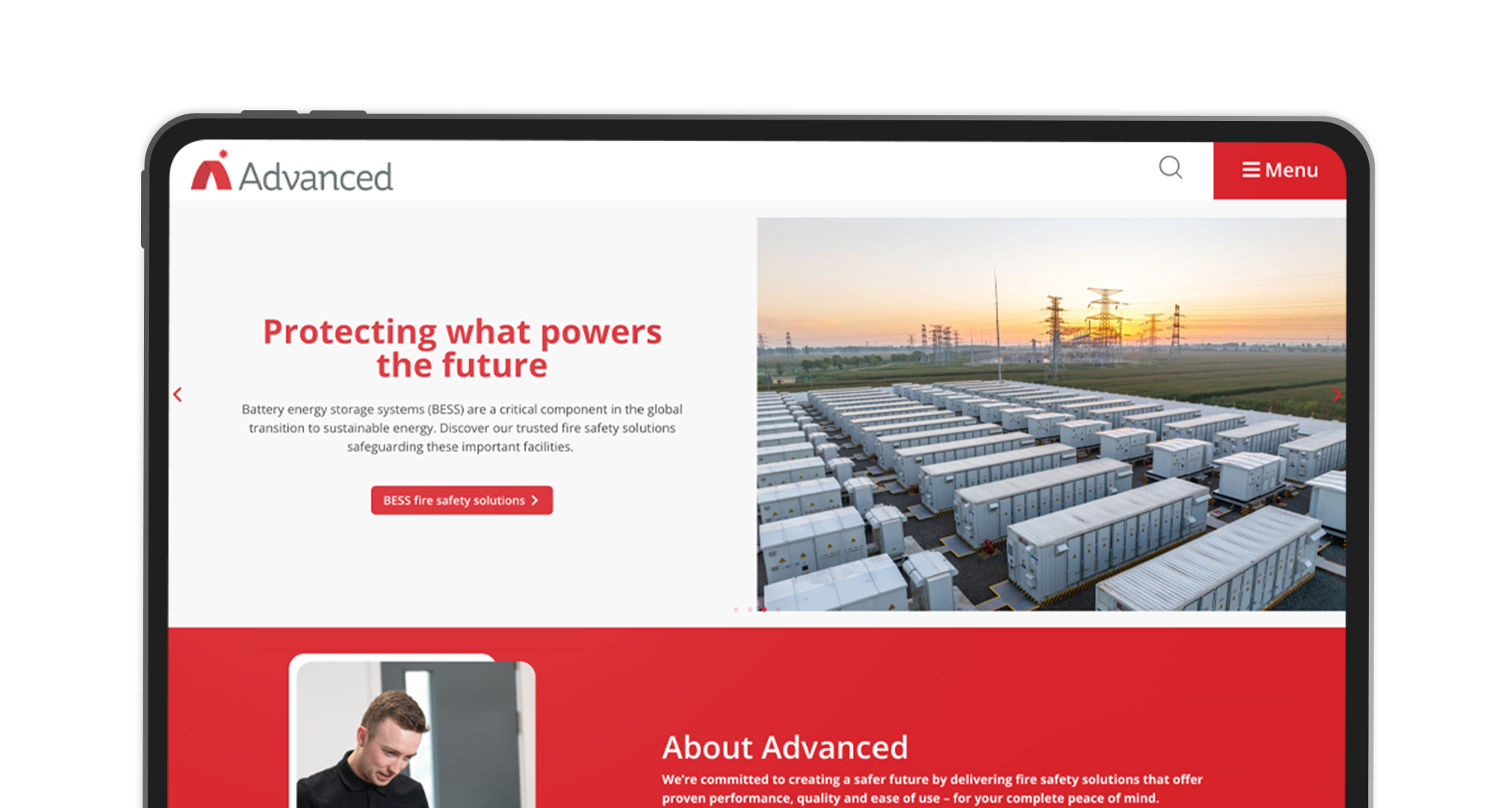
A technically complex product range. A platform that made every structural change expensive. A navigation that left fire installers unable to find what they came for.

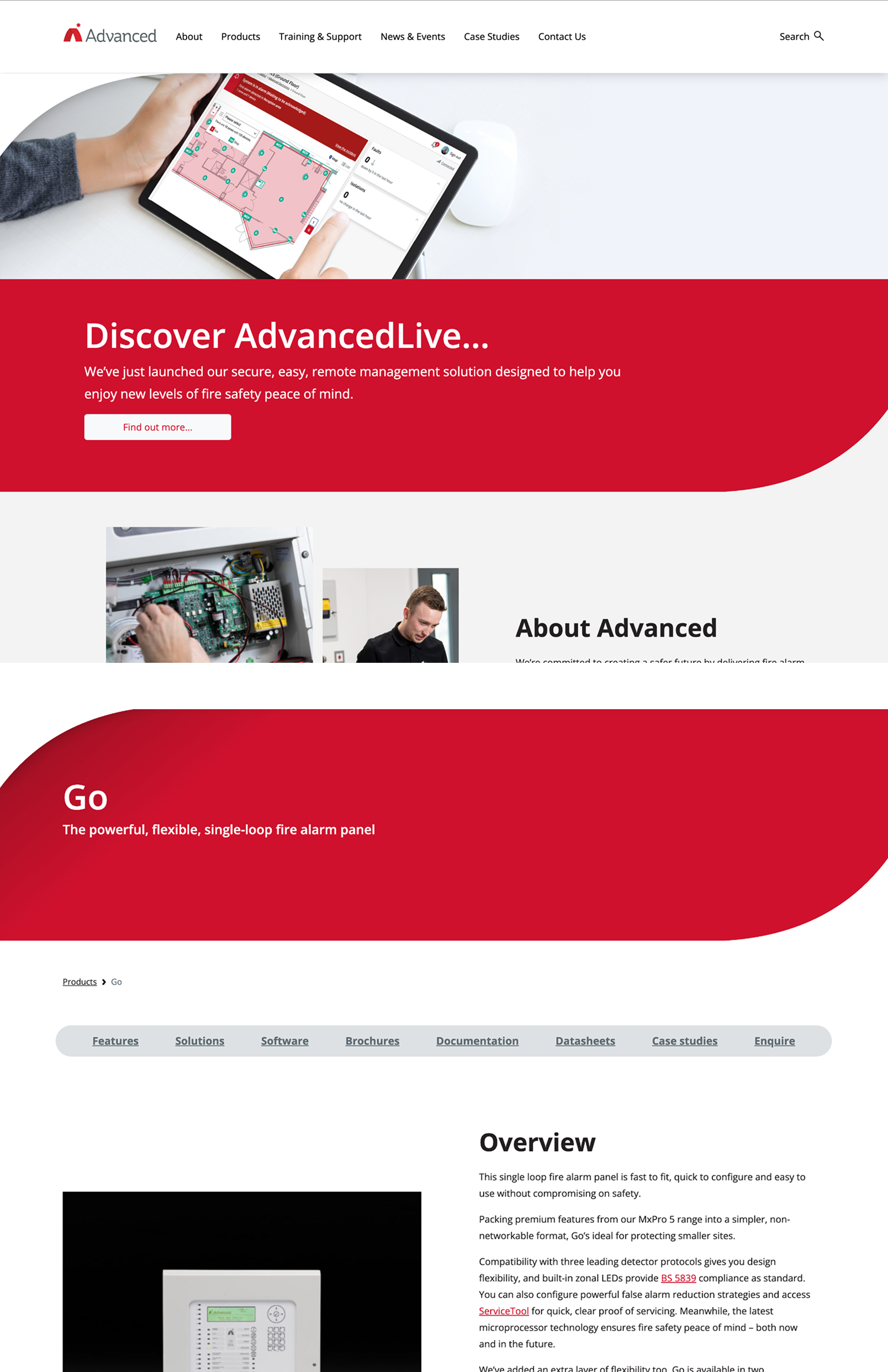
Old website. The site was dated, difficult for the user to find what they needed and even difficult for the client to update
Research
A stakeholder workshop, not individual interviews
Fire safety systems are a specialist domain. The people in the room — product managers, the marketing team, technical leads — understood the product range and its users better than external research could capture quickly. The workshop extracted that knowledge systematically and translated it directly into structural decisions.
Three things shaped everything that followed:
Products, datasheets and training were seperate. An installer finding a product then had to navigate to a different section entirely to find its datasheet. Many didn't bother. The information existed but the architecture made it practically invisible.
The product range had no hierarchy. Panels, controllers and detectors sat at the same level with nothing to help a user understand where to start or how products related to each other.
The platform was the root cause. Fixing the IA without fixing the platform would just repeat the cycle in a few years. Both problems had to be solved together.

Example of wireframe to full UI for the new website
What I did
Structure before style — end-to-end, no handoffs
I led the project from the initial workshop through to go-live. The structural decisions made in research had to stay intact all the way through to build — a handoff at any point would have put that continuity at risk.
The new architecture connected products explicitly to their supporting documentation where each product page became the hub for its own datasheet, training resources and related content — accessible directly, not buried elsewhere. Products were organised into a clear taxonomy reflecting how fire safety professionals actually think about the range, not how the old platform had forced it to be presented.
The platform rebuild gave the marketing team genuine control — the ability to make structural changes themselves, without booking developer time for every update.
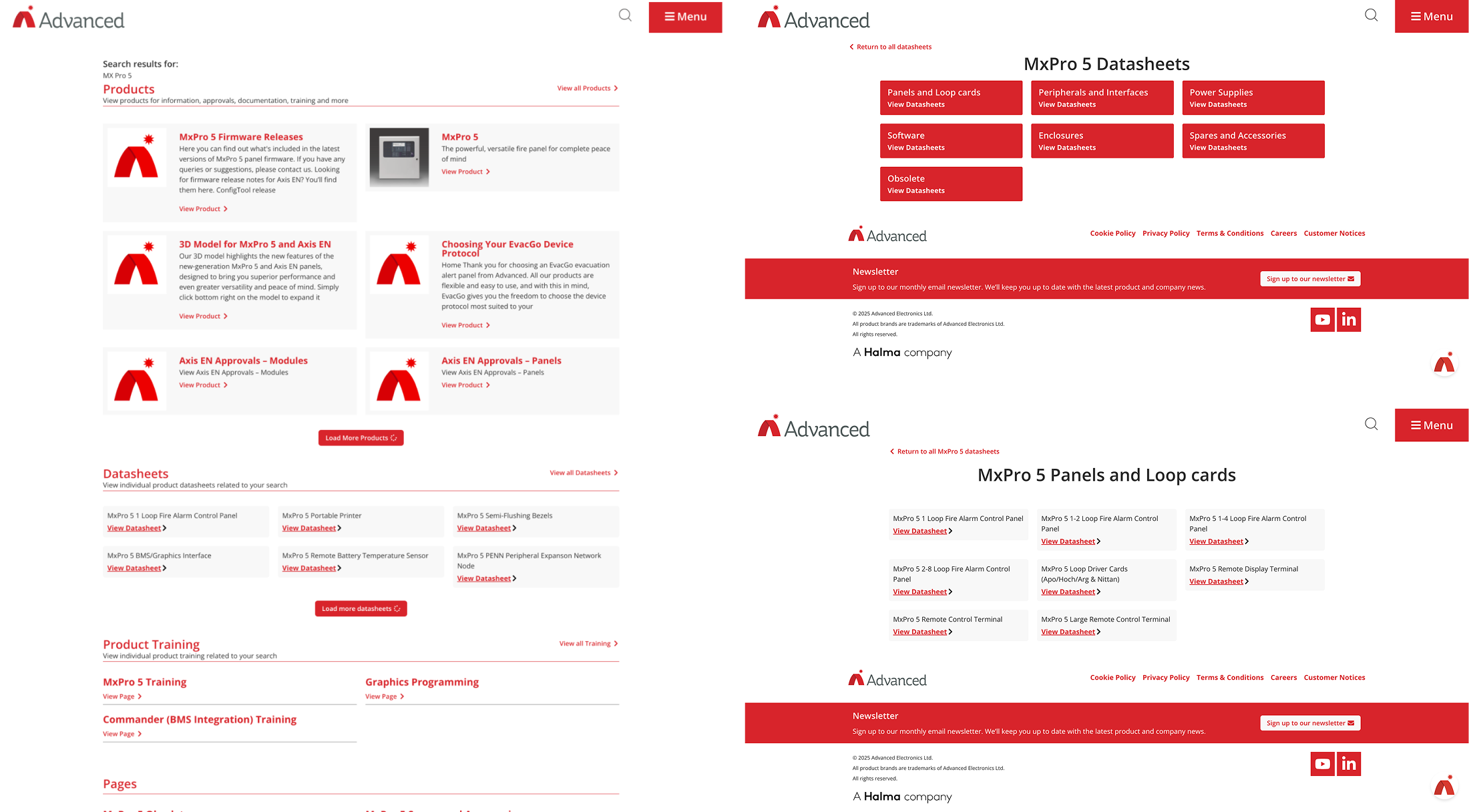
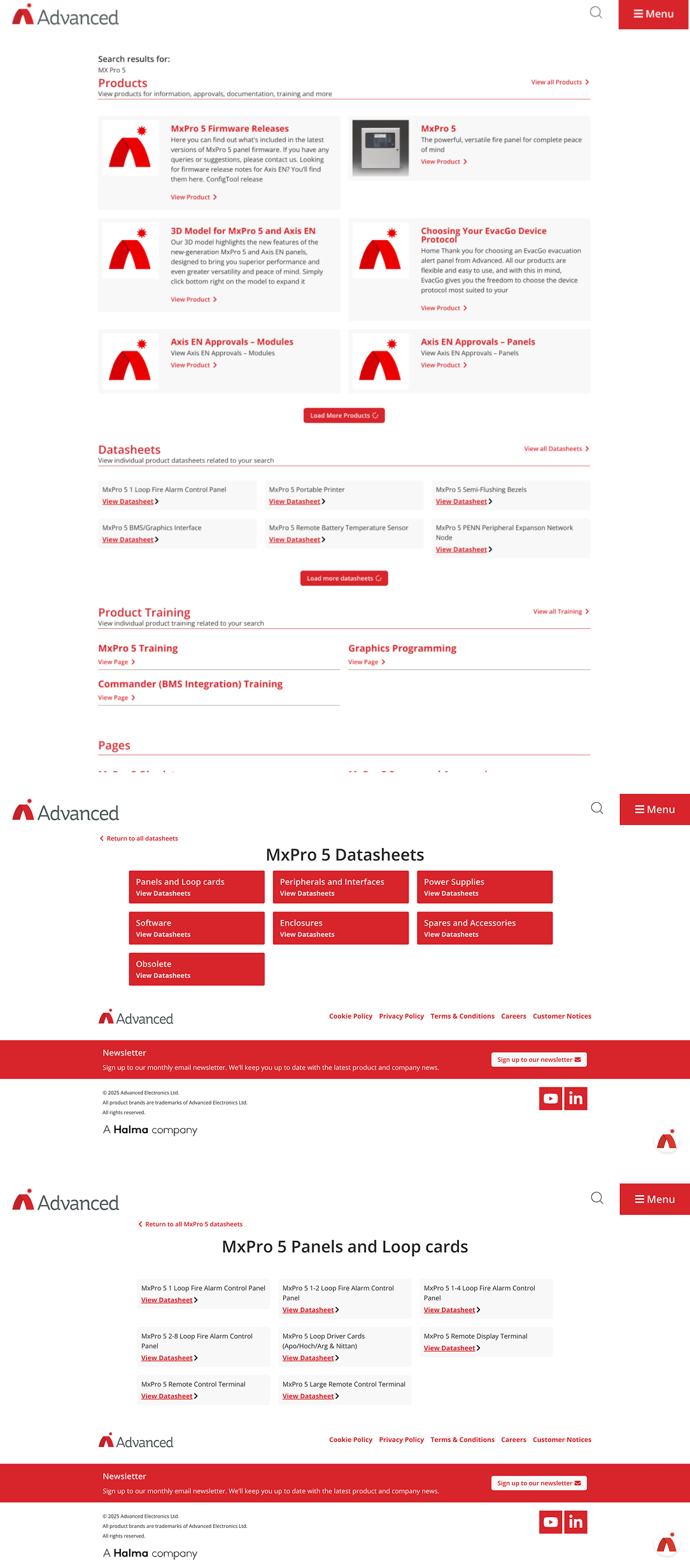
Screen examples showing the datasheets architecture of the new site
Outcome
A site the team could actually own
"A fresh new style and simpler navigation that was extremely easy to update and highly flexible."
Julia Banks, Marketing and Communications Consultant, Advanced Electronics
Simpler to navigate and easier to maintain. A better structure that still required expensive developer involvement would have degraded over time, exactly as the old site had. The rebuild addressed both problems simultaneously.
Stakeholder Feedback
“A fantastic job in helping us to bring a fresh new style and simpler navigation to our website. The site is built in a way that makes it extremely easy to update and highly flexible, so it will adapt as we grow.”
“We needed an innovative way to showcase this innovative product. You delivered a simple, eye-catching solution that conveys the platform’s ease of use whilst giving potential customers easy access to everything they might need to make a purchasing decision.”